
For executives who keep getting lost in the forest
Every forest has an ecology. Predators and foragers. Specialists and generalists. Animals that hunt and animals that range. Understanding which does what and why they behave the way they do isn’t about memorizing taxonomy but watching long enough to recognize the patterns. I promise this isn’t about taxonomy, mostly.
The content field is no different. What follows is a field guide to content based on the notes that I’ve collected over time. Offered without malice.
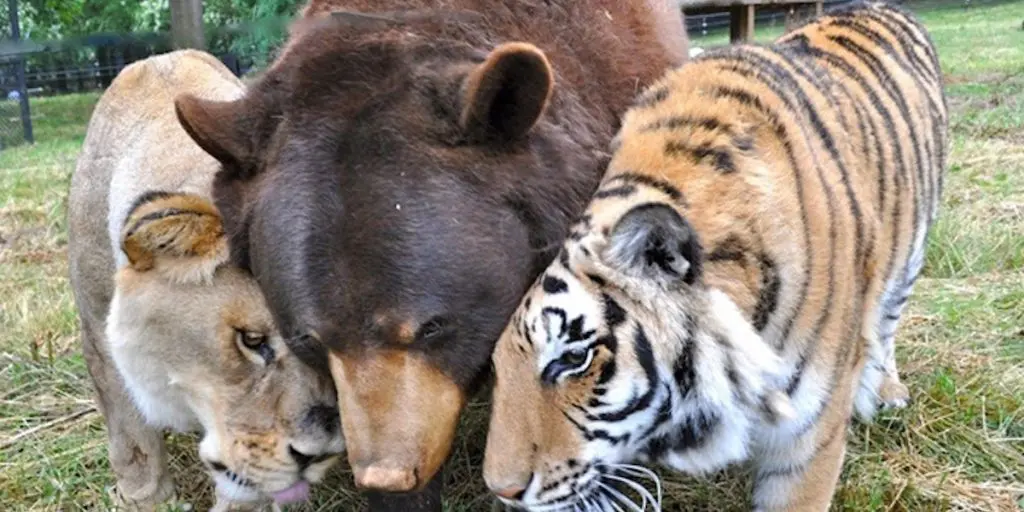
Lions: Content Design
Apex predator within a defined biome. The content design practitioner is methodical, coordinated, and very good at what it does inside its range—the interface layer, the product experience, the content that makes software legible and interactions coherent. Works in structured packs. Has developed sophisticated methods for operating within product development cycles.
The lion is not wrong about its domain. The interface layer is real and the work there is genuinely difficult. What the lion occasionally overstates is the size of its biome. Product content is not all content. The methods that work inside a design system do not automatically scale to enterprise content operations, brand governance, or the structural decisions that sit upstream of any individual product.
Encountered most frequently in: product organizations, design systems teams, UX-forward technology companies.
Caution: Lions are territorial about methodology. Expect friction at the borders.
Tigers: Content Marketing
Unmistakable in motion. Fast, territorial, built for the hunt. The content marketing practitioner arrives with metrics, a funnel, and a strong opinion about publishing cadence. They are optimized for pursuit and capture (traffic, leads, conversions) and they are genuinely good at it within their range.
The tiger is a specialist. It knows its territory and works it hard. What it does not do is range. The ecosystem beyond the funnel—the governance questions, the structural decisions, the content that lives inside products and experiences rather than in front of them—is not its natural habitat. It may tell you otherwise. Watch the behavior, not the claim.
Encountered most frequently in: marketing departments, demand generation functions, agencies with retainer models.
Caution: The tiger tends to define the entire forest as its territory. This is a confidence display, not a map.
An aside about foxes: UX Writing
Quick, adaptive, and perpetually underestimated. The UX writing practitioner moves through spaces the larger animals can’t reach. It works in the shadows (the invisible connective tissue of digital experience)—microcopy, error states, onboarding flows. Does some of its best work in the margins.
The fox does not hold territory. It moves through everyone else’s. This is simultaneously its greatest strength and the reason it keeps getting absorbed, redefined, or claimed by adjacent practices. Content designers say UX writing belongs to them. Content strategists say it’s a subset of voice governance. Product managers sometimes wonder if they need a UX writer at all or whether a template will do.
The fox knows things the larger animals don’t. It has been everywhere. It has read every error message, navigated every flow, felt every moment where the words failed the experience. That accumulated knowledge is worth more than its job title suggests.
Encountered most frequently in: product teams, design organizations, anywhere the interface meets the human.
Caution: Undervalue the fox at your own risk. It notices everything.
Bears: Content Strategy
Ranges widely. Has been in this forest longer than any of the others. It is an omnivore that feeds across the whole ecosystem, moves between the governance questions and the structural decisions and the voice work and the operational realities without needing to specialize to survive.
The content strategy practitioner is not optimized for the hunt. It is optimized for the terrain. It knows where the water is, where the territory changes, where the other animals’ ranges overlap and conflict. It has seen enough seasons to recognize patterns the newer arrivals are still calling unprecedented.
The bear does not move fast. It does not need to. What it does— auditing at scale, modeling information architecture, governing content across complex organizational systems, connecting content decisions to business outcomes—takes time, patience, and a tolerance for problems that don’t resolve cleanly. These are not qualities the content economy learned to reward. The metrics dashboards were not built for them.
This is why the bear keeps getting mistaken for something smaller than it is.
Encountered most frequently in: enterprise organizations with serious content problems, senior leadership roles where the structural questions have finally become impossible to ignore.
Caution: Do not confuse patience for passivity. The bear has been watching longer than you have been asking. They abide.
And the forest?
The animals are real. The territories are real. The friction at the borders is real, expensive, and largely unnecessary.
What the forest lacks is not more specialists. It has those. What it lacks is a shared understanding of the ecosystem—who ranges where, who does what, and why the whole thing works better when the animals stop mistaking territorial claims for maps.
Organizations that figure that out stop asking what to call the work and start asking what the work needs to do. That is a different question. It is the right question.
The forest is waiting for someone to ask it.
Want to explore what the bear knows? Schedule a free consultation.