
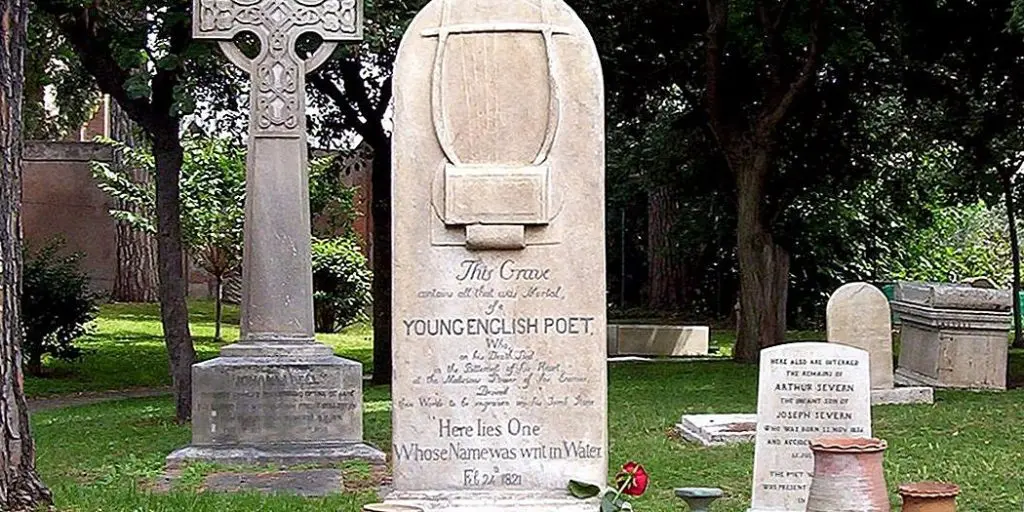
No pride of authorship
In my first real job, I was a technical editor and sometimes writer for environmental remediation reports, site assessments and the like. The documentation nobody reads unless it’s in their backyard.
The firm hired me to make the reports accessible to the public. I was a bit intimidated by the scientists and the engineers who knew all this. I was young enough to think my sentences were mine after interrogating them. The president of the company set me straight early, and he did it without meaning to teach me anything. He was talking about the work, the way you talk about weather, giving me my instructions. He said: “We have no pride of authorship here.”
He meant it unambiguously. He meant the client’s name goes on it, not the geologist’s, not mine, not our firm’s. He meant no one signs the work or defends a specific sentence because they wrote it. He meant no one mistakes the satisfaction of writing well with the point of the task. The work belonged to the people who paid for it and to the people who would read it and never think about who wrote it. That was the job. Disappear into it.
I have carried that sentence for thirty years.
I have carried it through every client I have ever written or worked for: industry to industry, program to program for companies whose products I mostly would not have picked off a shelf. I wrote in their language, not mine. Sometimes, I helped define that. I learned the cadences we defaulted to and worked toward them. When the work was good, no one knew I had been there.
When the work was very good, users did not know I had been there. And, clients came to believe they had always sounded this way, that the voice had been theirs all along. Content strategists disappear.
That is the strange alchemy of the thing. The better you do it, the less of you remains in it. Success is measured by absence. You are trying to leave no trace—and the trace you are trying hardest to erase is the one that would say “I made this.”
It took me a long time to understand that this is not modesty. Modesty is a posture; you can put it on. This is something harder and more total. It is the deliberate emptying of the self out of the work so that the work can belong to someone else entirely. The maker does not stand beside the made thing, pointing. The maker gets out of the way.
This is what no one tells you when you are twenty-five and proud. Getting out of the way is not the sacrifice you make to do the work. It is the work. The discipline is not something you practice so that you can then go make something.
The disappearing is the making. Poiesis.
Negative capability
Brown & Dilke walked with me & back from the Christmas pantomime. I had not a dispute but a disquisition with Dilke, on various subjects; several things dovetailed in my mind, & at once it struck me, what quality went to form a Man of Achievement especially in Literature & which Shakespeare possessed so enormously—I mean Negative Capability, that is when man is capable of being in uncertainties, Mysteries, doubts, without any irritable reaching after fact & reason.
—John Keats to his brothers George and Tom, 1817
John Keats wrote that to his brothers George and Tom in December of 1817. He was twenty-two, walking home from a farce.
No poem. No essay. Just a description of a walk home from the Christmas pantomime with two friends. Then an idea struck him mid-conversation, which he half-caught a few days later in a letter that survives only because someone copied it out after Keats was dead. Before the odes. Before the epitaph.
It mirrors the most durable thing anyone has said to me about how good work gets made. It arrived in that offhand line from my first boss, who was not setting out to teach me anything.
The phrase is prone to misinterpretation. “Negative capability” sounds like weakness or inability. Skimmed, Keats seems to praise not-knowing, as though confusion were a virtue.
It is nothing of the kind. The word “irritable“ carries the inherent caveat. Keats is not against fact, reason, or knowledge; he read for long hours at a time, and he reached for truth his whole too-short life. What he is against is the irritable reaching—the ego’s need to resolve or pin the work down, and then put a name at the end. The reaching that cannot leave a question open, because an open question is a place where the self does not get to be always right.
He gives that failure a face. In the same breath he sets Coleridge against Shakespeare. Coleridge, he writes, “would let go by a fine isolated verisimilitude caught from the Penetralium of mystery, from being incapable of remaining content with half knowledge.” There is the irritable reaching. To Keats, Coleridge stands at the edge of a mystery and cannot leave it half-known. He reaches in to resolve it, to explain it, to have it—and in the grasping, the fine isolated thing slips past him. He loses it by clutching. The mind that must know, must close, must be seen to have arrived, is the mind that cannot make the thing that lasts. It is too busy being present to disappear.
Walter Jackson Bate states the positive version in his 1963 biography. Negative capability needs “an imaginative openness of mind and heightened receptivity to reality in its full and diverse concreteness. This, however, involves negating one’s own ego.”*
There it is. It isn’t modesty, nor is it humility as a manner. The negating of the ego—the deliberate setting-aside of the self’s demand to be present and credited for the making. The same emptying that my boss meant when he said we had no pride of authorship. The poet, the critic, and the boss: three men who never met, describing one discipline.
And Keats gives the discipline its master. Shakespeare, who possessed it “so enormously.” The greatest maker in the language is the one who disappears most completely, who is nowhere in the plays, who takes no side, who becomes Iago as fully as Cordelia and judges neither, who empties himself so wholly into what he makes that four centuries of readers cannot find the man inside the work.
We know very little about him. That is not a gap in the record. That is the achievement.
Own, and disappear
The odes do the work here: Ode to a Nightingale, To Autumn.
I have academic history with these. So, what can they teach us in the current moment? How does it connect to content strategy?
Read “To Autumn.” Find the poet in it. Try. It’s the epitome of negative capability. Keats made choices yes, but they disappear in the service of the whole. It’s “a half-reap’d furrow sound asleep.” Not Keats.
All meaning is fluid based on what the audience brings to it. Everyone observes and receives meaning differently. This, however, doesn’t necessarily work for brands, where they need a bit of presence.
Autumn disappears too completely for a brand. The question is whether a maker can disappear and still remain. With that in mind, let’s look at “Ode to a Nightingale.”
In “Ode to a Nightingale,” the poet sits at the center. It opens on his self and never quite loses that: “My heart aches.” He is present throughout—aching, listening, and longing. But, it’s what he longs for is key: he longs with his whole being to stop being himself.
He wants to follow the bird’s song out of the world. To “fade far away, dissolve, and quite forget / What thou among the leaves hast never known, / the weariness, the fever, and the fret”. Take the verbs in order: fade, dissolve, forget. It isn’t rest but self-erasure in three steps. To fade is to grow faint but remain. To dissolve is to lose one’s edges. To “quite forget” is to completely lose even the memory of having been a self.
But here, the poem takes a strange turn. As the self goes dark, the world does not. It floods in. The speaker, faded into the shadow, says he “cannot see what flowers are at my feet,” but then the poem fills with the world that he can no longer see flooding in: the grass, the thicket, the fruit-tree, violets, the coming musk-rose, and, last, “the murmurous haunt of flies on summer eves”.
Extinguish the seeing self and the world arrives in full, concrete, murmurous detail. This is what negating the ego is for. Not blankness. Reception. The self that stops insisting on being the one who sees is the self that finally receives the thing in all its diverse concreteness. The haunt of flies is the reward, not the cost.
It shades toward death, and Keats will not pretend otherwise—a few lines on he is “half in love with easeful Death… ready to cease upon the midnight with no pain.” The longing to disappear completely is close kin to the longing not to exist. To negate the self entirely is to die. But short of that total vanishing, the disappearing does something else: it opens the world.
And it makes something that lasts. In the seventh stanza the song turns deathless: “Thou wast not born for death, immortal Bird!” Not immortal because the bird outlives other birds. Immortal because its song has outlived every ear that ever caught it. Keats asks what that deathless song actually is, and his answer is the thing that has stayed with me for thirty years. It is not that the song means one great fixed thing. It is that it has meant something different to everyone who ever heard it:
Perhaps the self-same song that found a path
Through the sad heart of Ruth, when, sick for home,
She stood in tears amid the alien corn;
The same that oft-times hath
Charm’d magic casements, opening on the foam
Of perilous seas, in faery lands forlorn.
The self-same song. It found a path through the sad heart of Ruth, sick for a home that is not this field, standing in tears amid corn that is not hers. It sang her own homesickness back to her. But the same song charmed magic casements open on perilous seas.
One song, different meanings: Ruth’s grief, the casements’ wonder, the emperor’s triumph and the clown’s jests. They all heard the same source, but none of them exhausted it or claimed it.
The song is deathless because it was never pinned to a single, absolute meaning. A song fixed to one meaning would have died with the first listener. The song survives because every ear receives it differently. It is open enough, empty enough of its own insistence, to become Ruth’s grief and the casements’ wonder at once, without contradiction, without ever being only one of them. The bird put no self into the song. That is why the song can hold everyone’s.
And then the bell—on the very last word of that vision. “Forlorn.” The word ends the stanza in faery lands, and opens the next as its own undoing: “Forlorn! the very word is like a bell / To toll me back from thee to my sole self.”
The naming breaks the spell and returns him to himself—a man in a garden again, awake, alone. He could not hold the disappearance. No one can, entirely. The fading was only ever the wish; the self comes back.
But the song remains. The bird flies, the fancy flees—”Fled is that music: Do I wake or sleep?” Yet the music that fled is what we still have, two centuries on. It means something different to everyone who finds it. The maker was tolled back to his sole self. The made thing stayed open, and lasted.
This is the version a brand can use.
Not Autumn’s total vanishing—the poet gone so wholly there is no one there at all. It is Nightingale’s harder discipline: a self that remains, present enough to hold a shape, disappeared enough to let the meaning be received. The negative capability that matters is not the absence of structure. It is ambiguity held within structure—a song formed enough to travel, open enough to become the listener’s own.
The bird keeps its song. Ruth keeps her grief. Neither cancels the other, because the song was made to hold both.
That is the discipline, and it is not a paradox to admire. It is the work. Build the structure that carries the meaning without fixing it. Hold the shape; let go of the meaning.
Own, and disappear.
The work now
I only knew the poetry in a very different context when my boss first told me this in 1990-something. I was twenty-five, a little intimidated, and proud of the sentences I wrote and reworked. He was not teaching me negative capability. He had probably not read any Keats past high school. He was telling me how the work got done in a consulting context, the way you’d tell someone where the coffee was.
But he described the same discipline Keats found walking home from a pantomime, the one Shakespeare had so enormously, the one the bird has in the garden. Get the self out of the way. Build the thing well enough that it can hold what other people bring to it. Then let it go, and let it be theirs.
Thirty years on, that is still the work.
It doesn’t disappear because the self doesn’t matter—it does; the maker has to be present enough to build the structure, hold the shape, make the choices Keats made with the furrow. Disappearing because the made thing has somewhere to go that the maker was never invited: the client’s voice, the reader’s need, the field that isn’t yours where someone stands sick for home and hears, in what you made, their own grief sung back to them.
The song belongs to Ruth. It belongs to everyone. It always did.
We have no pride of authorship here.
*Bate, Walter Jackson. John Keats. Belknap Press of Harvard UP, 1963, p. 249.
**Also, Ode on a Grecian Urn. I encourage you to read them all because they are just awesome despite or beyond anything I have to say. Among the finest poems written in English.
If you want to learn more about this or just want to gab about poetry and its implications, schedule a free consultation.